halloween sign ct scan epligotitis halloween essen
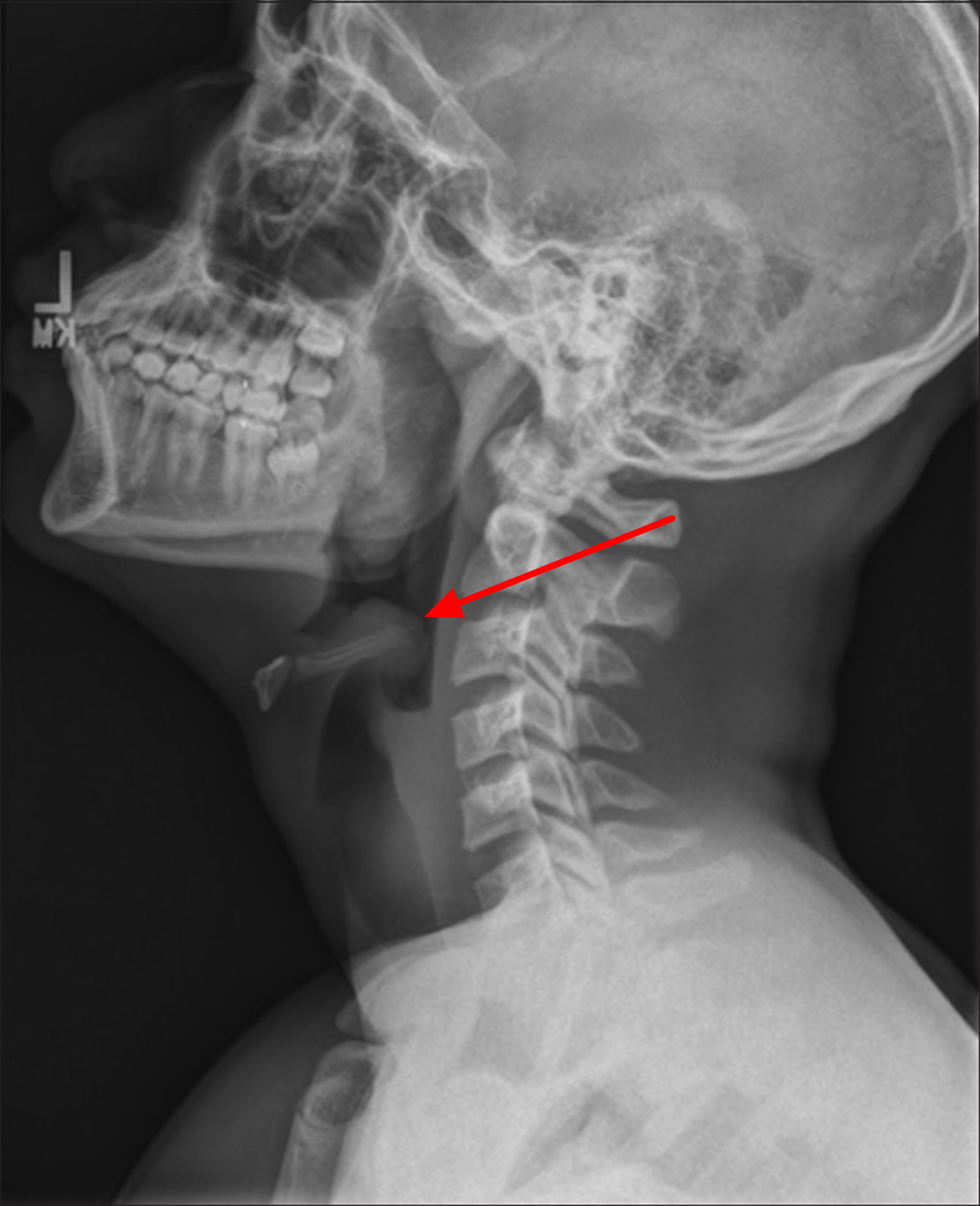
CT. CT is only rarely obtained, and usually when the diagnosis is unclear. Indeed, placing the child in the supine position can actually precipitate respiratory arrest. If a scan is obtained, marked edema and thickening of the epiglottis and aryepiglottic folds may be seen with narrowing of the airway. On lateral C-spine X-ray, the thumbprint sign describes a swollen, enlarged epiglottis. [10] A normal X-ray, however, does not exclude the diagnosis. [10] An ultrasound may be helpful if specific changes are present, but its use (as of 2018) is in the early stages of study. [10] On CT imaging, the "Halloween sign" describes an epiglottis of The thumb sign in epiglottitis is a manifestation of an edematous and enlarged epiglottis which is seen on lateral soft-tissue radiograph of the neck, and it suggests a diagnosis of acute infectious epiglottitis. This is the radiographic corollary of the omega sign 1-3. Thumb sign is a term also used in other conditions: Computed tomography (CT) scan in an adult with acute epiglottitis shows a column of air around the epiglottis (E). The right side is more swollen than the left, and the hypo-attenuating area (A) is suggestive of fluid or the early formation of an abscess. View Media Gallery. In addition to Hib, bacterial culprits include groups A beta-hemolytic Halloween sign: describes the CT appearance of a normal-thickness epiglottis Epiglottis A thin leaf-shaped cartilage that is covered with laryngeal mucosa and situated posterior to the root of the tongue and hyoid bone. During swallowing, the epiglottis folds back over the larynx inlet thus prevents foods from entering the airway. Obliteration of the vallecula (“vallecula sign”) may be seen (figure below, white arrow). Performance? ~88% sensitive, so a negative X-ray doesn't exclude epiglottitis. (27247205) neck CT scan. Roles of CT scan: [1] Diagnosis of epiglottitis. Contrasted CT scan of the neck has a sensitivity of 88-100% and specificity of ~96% for epiglottitis. The epiglottis is a single midline leaf-shaped fibrocartilaginous structure that forms part of the supraglottic larynx and defines the division of the hypopharynx from the larynx. It helps conduct food boluses from the oropharynx to esophagus, avoiding the food entry into the larynx 7. It is one of the 9 laryngeal cartilages. X-ray of the lateral soft tissue of the neck shows a swollen epiglottis and pre-vertebral soft-tissue swelling. direct laryngoscopy by an expert is however, the gold standard investigation.[30, 31] CT scan shows diffuse thickening of the epiglottis and AEFs. Laryngoscopic examination requires special training this facility is usually available Andr~ Lamothe, MD*. Rece~ved for publication April i9, 1996. Revisions received December 12, 1996, andJanuary 1 and 29, 1997. Accepted for publication February 4, 1997. DrH~bert is acareer scientist with the Ontario Ministry of Health. Presented in part a he1995 Canadian Society of Otolaryngology Annual Meeting held in St John, New Brunswick A contrasted Computer Tomography (CT) neck was performed in view of the protracted course of recovery. This revealed oedema of the epiglottis and aryepiglottic folds bilaterally, but no abscesses or abnormal masses were seen (Fig. 4). The patient was discharged on day 9 of admission after the scan. He was reviewed regularly in the outpatient It should be noted that an omega epiglottis, either a variant of normal or in the setting of laryngomalacia, can result in a similar appearance and can be mistaken for epiglottitis. In epiglottitis, the hypopharynx may be over-distended. CT. CT is only rarely obtained, and usually when the diagnosis is unclear. Safneck et al. (1993) reported a 13-year-old male with foreign body sensation and difficulty breathing while supine who underwent CT scan revealing a 2 cm mixed attenuation mass on the laryngeal surface of the epiglottis with subsequent excision yielding solitary fibrous tumor. 22 Neurogenic tumors such as schwannomas, neurofibromas, and Background Only about 1% of all head and neck lateral or paramedian cancers described in the scientific literature shows, in staging, contralateral cervical adenopathy without ipsilateral pathological involvement of lymph nodes. Case Presentation This case is one of them, in which 18F–FDG PET/CT scan is confirmed by pathology findings, and has correctly identified all metastatic disease foci We present a 65-year-old female with an incidental 1 cm exophytic, pedunculated, papillomatous lesion on the laryngeal surface of the epiglottis discovered upon endoscopic evaluation for dyspepsia and heartburn. Because of her risk factors for malignancy, CT scan was requested and revealed only benign features. Figure Figure1 1- -c: c: transaxial PET/CT scan shows an increased [18F]-FDG uptake area on the right versant of the epiglottis (white arrow); Fig. Fig.1 1- -d: d: transaxial PET/CT scan demonstrates clearly that right lateral cervical lymph nodes are not pathological (red arrow) and confirm, on the left side, the adenopathy (white arrow). It should be noted that an omega epiglottis, either a variant of normal or in the setting of laryngomalacia, can result in a similar appearance and can be mistaken for epiglottitis. In epiglottitis, the hypopharynx may be over-distended. CT. CT is only rarely obtained, and usually when the diagnosis is unclear. n January 2016 and October 2019. The diagnosis of acute epiglottitis was based on the clinical presentations and fiberoptic laryngoscopic examinations of the larynx and hypopharynx. Details of age, gender, personal history, clinical symptoms, treatment, and hospital stay were evaluated. Results: Out of the 28 patients with acute epiglottitis, 17 (60.71%) were male and 11 (39.29%) were female American Roentgen Ray Society Images of Epiglottitis CT scan All Images X-rays Echo & Ultrasound CT Images MRI; Ongoing Trials at Clinical Trials.gov. US National Guidelines Clearinghouse. NICE Guidance. FDA on Epiglottitis CT scan. CDC on Epiglottitis CT scan. Epiglottitis CT scan in the news. Blogs on Epiglottitis CT scan An imaging test: An X-ray or computerized tomography (CT) scan can sometimes identify a swollen epiglottis, which will appear on screen as a small wedge at the top of the throat. A throat culture: If the Hib bacterium is present, the medical team can identify it by wiping the epiglottis with a cotton swab and analyzing the sample in a lab. Epiglottitis is a medical emergency. If you or someone you know exhibits epiglottitis symptoms — such as difficulty breathing, difficulty swallowing, hoarseness or drooling — call 911 or head to your nearest emergency room. At the hospital, healthcare providers will begin epiglottitis treatment:
Photos